前面介绍了面向对象的继承思想,继承思想的核心是代码的复用和程序功能高度的扩展性。继承可以直接实现代码的复用,功能的扩展性是指继承后的类在父类的基础上增加新的行为,或者对父类的行为进行扩展。
例1:在父类的基础上增加新的行为
在『面向对象的继承思想』一节中,给出了一个案例,案例内容及案例代码参见『面向对象的继承思想』一节。案例中类继承结构如下图所示:
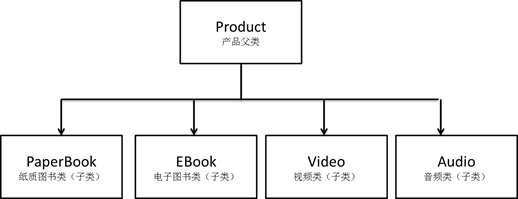
图 1 类继承结构图
图中的纸质图书类,电子图书类、视频类和音频类均继承于Product类,被继承的Product称为父类,继承的纸质图书类,电子图书类、视频类和音频类称为子类,子类继承父类的所有属性和方法。现在要求PaperBook类除了输出Product类的公有属性外,还要输出PaperBook类的私有属性。从案例代码中可以看出,PaperBook类的父类提供了输出公有属性的行为,下面是Product类和PaperBook类的代码:
#声明Product类
class Product(object):
    #构造方法
    def __init__(self,inName,inPrice,inAuthor,inSummary):
        self.name = inName;
        self.price = inPrice;
        self.author = inAuthor;
        self.summary = inSummary;
    #输出产品属性
    def outProduct(self):
        print("产品名称:%s" % (self.name));
        print("产品价格:%f" % (self.price));
        print("产品作者:%s" % (self.author));
        print("产品摘要:%s" % (self.summary));

#声明图书类,图书类继承于Product类
class PaperBook(Product):
    #构造方法
    def __init__(self,inName,inPrice,inAuthor,inSummary,inWords,inPageNumbers):
        Product.__init__(self,inName,inPrice,inAuthor,inSummary)
        self.words = inWords;
        self.pageNumbers = inPageNumbers;

book = PaperBook("Pyhton编程基础",39.9,"Jack","Python编程基础知识","120千字","320页");
book.outProduct();
上面的代码执行结果如下图所示:
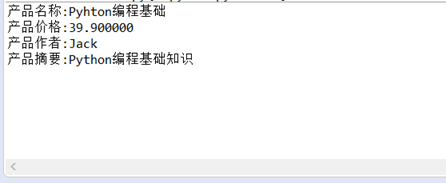
PaperBook类虽然可以调用父类的outProduct()方法输出公有属性,但无法输出PaperBook类的私有属性。这种情况下,可以在PaperBook类增加outPaperBook()方法,用于输出PaperBook类的私有属性,代码如下:
  #声明Product类
class Product(object):
    #构造方法
    def __init__(self,inName,inPrice,inAuthor,inSummary):
        self.name = inName;
        self.price = inPrice;
        self.author = inAuthor;
        self.summary = inSummary;
    #输出产品属性
    def outProduct(self):
        print("产品名称:%s" % (self.name));
        print("产品价格:%f" % (self.price));
        print("产品作者:%s" % (self.author));
        print("产品摘要:%s" % (self.summary));

#声明图书类,图书类继承于Product类
class PaperBook(Product):
    #构造方法
    def __init__(self,inName,inPrice,inAuthor,inSummary,inWords,inPageNumbers):
        Product.__init__(self,inName,inPrice,inAuthor,inSummary)
        self.words = inWords;
        self.pageNumbers = inPageNumbers;
    def outPaperBook(self):
        self.outProduct();
        print("图书字数:%s" % (self.words));
        print("图书页数:%s" % (self.pageNumbers));

book = PaperBook("Pyhton编程基础",39.9,"Jack","Python编程基础知识","120千字","320页");
book.outPaperBook();
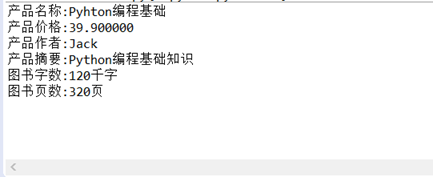
outPaperBook()方法首先调用父类的outProduct()方法输出公有属性,然后再输出该类的私有属性。执行结果如下图所示:
例2:扩展父类的行为
例1要求PaperBook类除了输出父类Product类的公有属性外,还要求输出PaperBook类的私有属性,例1给出的解决方案是在PaperBook类增加outPaperBook ()方法,该方法首先调用父类的outProduct()方法输出父类的公有属性,然后再输出PaperBook类的私有属性。
其实,还有一种解决方案,在PaperBook类中重写父类的outProduct(),这样当PaperBook对象调用outProduct()方法时,其父类的outProduct()方法被忽略,而执行PaperBook类的outProduct()方法。代码如下:
#声明Product类
class Product(object):
    #构造方法
    def __init__(self,inName,inPrice,inAuthor,inSummary):
        self.name = inName;
        self.price = inPrice;
        self.author = inAuthor;
        self.summary = inSummary;
    #输出产品属性
    def outProduct(self):
        print("产品名称:%s" % (self.name));
        print("产品价格:%f" % (self.price));
        print("产品作者:%s" % (self.author));
        print("产品摘要:%s" % (self.summary));

#声明图书类,图书类继承于Product类
class PaperBook(Product):
    #构造方法
    def __init__(self,inName,inPrice,inAuthor,inSummary,inWords,inPageNumbers):
        Product.__init__(self,inName,inPrice,inAuthor,inSummary)
        self.words = inWords;
        self.pageNumbers = inPageNumbers;
    #输出图书产品属性
    def outProduct(self):
        print("图书名称:%s" % (self.name));
        print("图书价格:%f" % (self.price));
        print("图书作者:%s" % (self.author));
        print("图书摘要:%s" % (self.summary));
        print("图书字数:%s" % (self.words));
        print("图书页数:%s" % (self.pageNumbers));

book = PaperBook("Pyhton编程基础",39.9,"Jack","Python编程基础知识","120千字","320页");
book.outProduct();
例2给出的子类重写父类的方法,就是面向对象的多态概念。在程序运行过程中,子类的行为代替了父类的行为。父类Product类有输出属性的方法outProduct(),而它的子类PaerBook类也有这个方法。Python解释器会根据不同的对象实例调用相对应的方法。如果在子类中定义某方法与其父类有相同的名称和参数,就称为方法的重写,方法重写是父类与子类之间多态性的一种表现。
多态是面向对象编程的一大特征,利用多态特征编程,可以让应用程序具有良好的扩展性。通过子类对父类方法的重写,可以在不改变原有代码的情况下扩展程序的功能。